
How Experiential Learning Improves Leadership Development and Decision-Making Skills
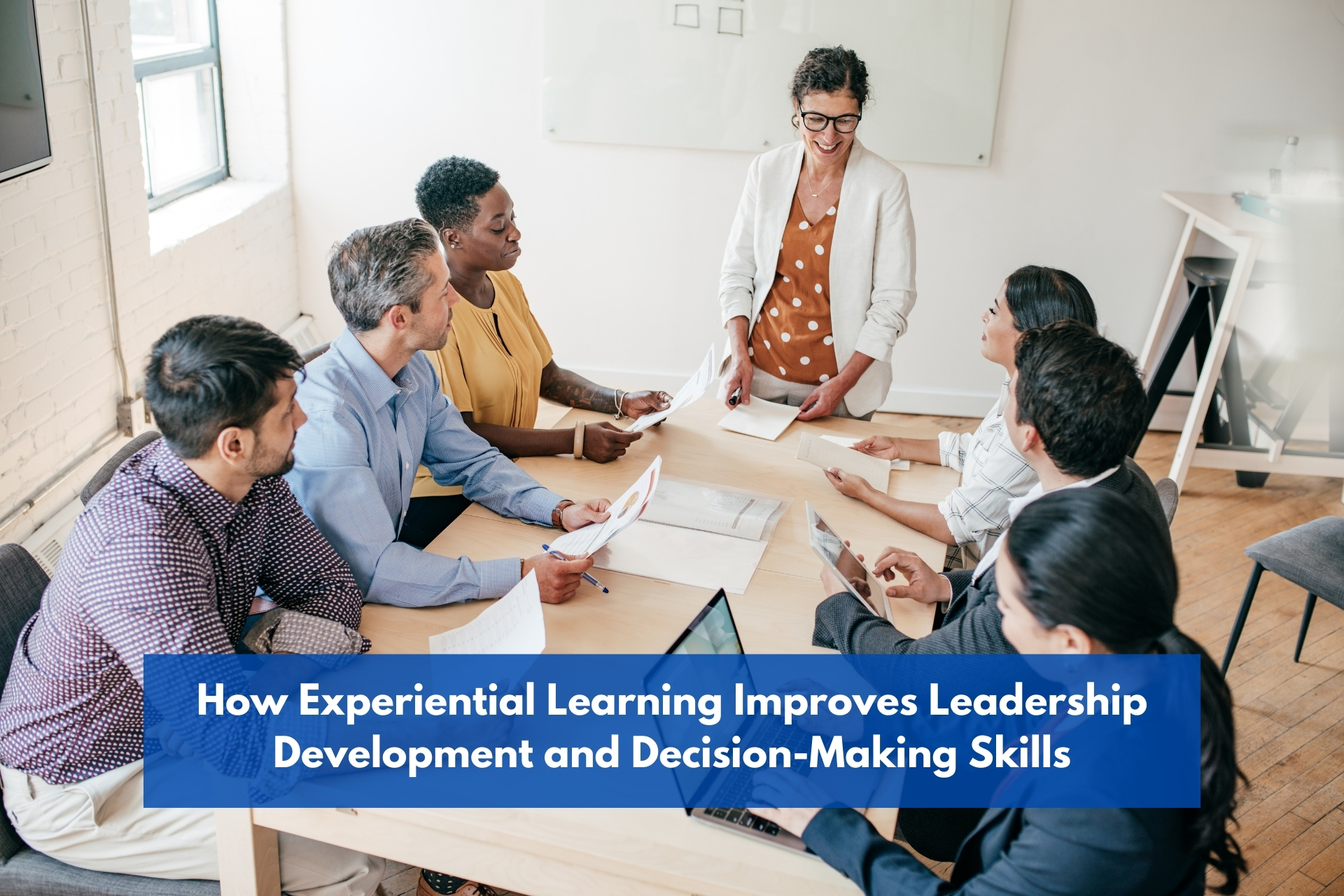
Leadership today is not just about knowing theories or following instructions. It is about taking the right actions, making smart decisions, and handling real-life challenges with confidence. Traditional learning methods, such as classroom lectures or reading books, often explain what a leader should do, but they do not always prepare leaders for how to act in real situations.
Table of Contents
ToggleThis is where experiential learning becomes important. Experiential learning means learning through real experiences, such as solving problems, participating in simulations, working in teams, or making decisions in practical situations. Instead of only listening or reading, learners actively practice leadership skills.
By learning through experience, individuals understand situations better, improve their thinking ability, and gain confidence in decision-making. This approach helps develop leaders who are prepared to face real-world challenges, adapt to change, and make effective decisions when it matters most.
What Is Experiential Learning?
In a company, experiential learning means helping employees and leaders learn through real work experiences instead of only through classroom training or presentations. Employees develop skills by actively handling tasks, solving real problems, and making decisions in actual or simulated work situations.
For example, companies use experiential learning through:
- On-the-job training where employees learn while performing their roles
- Real business projects that challenge teams to solve company-related problems
- Leadership simulations and role-plays to practice decision-making and communication
- Team-based activities that improve collaboration and problem-solving
- Job rotations or stretch assignments to gain experience in different roles
This type of learning allows employees to apply knowledge immediately, learn from mistakes in a safe environment, and gain confidence. In companies, experiential learning helps build strong leaders, improves decision-making, increases employee engagement, and prepares teams to handle real-world business challenges effectively.
Why Experiential Learning Is Effective for Leadership Development?
Experiential learning is highly effective for leadership development because leadership is not just a concept to understand it is a skill to practice. Experiential learning prepares leaders for these situations by allowing them to learn through direct experience.
1. Leadership Skills Are Built Through Practice, Not Theory
Leadership involves actions like guiding teams, resolving conflicts, and taking responsibility. Experiential learning gives individuals the opportunity to practice leadership behaviors in real or simulated situations. This hands-on practice helps leaders understand what works and what does not, making learning more practical and useful.
2. Improves Self-Awareness and Emotional Intelligence
When leaders take part in real activities, they become more aware of their strengths, weaknesses, and behavior. Feedback from peers, mentors, or trainers helps them understand how their actions affect others. This improves emotional intelligence, which is a key quality of effective leadership.
3. Enhances Decision-Making Under Real Conditions
Experiential learning places leaders in situations where they must make decisions with limited time or information, similar to real work environments. This helps them develop critical thinking, judgment, and the ability to handle pressure. Over time, leaders become more confident and effective decision-makers.
4. Encourages Learning From Mistakes
In experiential learning, mistakes are seen as learning opportunities rather than failures. Leaders can test ideas, take calculated risks, and learn from outcomes without serious consequences. This builds resilience and helps leaders improve their decision-making skills.
5. Builds Confidence and Ownership
When leaders successfully handle challenges during experiential activities, their confidence grows. They learn to take ownership of their decisions and actions. This sense of responsibility is essential for strong leadership in real organizational settings.
6. Strengthens Communication and Teamwork
Experiential learning often involves group activities, role-plays, and team projects. These experiences help leaders practice clear communication, active listening, and collaboration. Leaders learn how to motivate teams, manage conflicts, and build trust through direct interaction.
7. Creates Long-Term Learning and Behavior Change
Because experiential learning involves active participation and reflection, lessons are remembered longer. Leaders are more likely to apply what they have learned in their daily work. This leads to real behavior change, not just temporary knowledge gain.
How Experiential Learning Builds Core Leadership Skills?
Experiential learning strengthens leadership skills by exposing individuals to real workplace situations where they must think, act, and lead in practical ways. Unlike theory-based learning, it helps leaders develop abilities that are required for everyday organizational challenges.
1. Transforms Knowledge Into Action
Experiential learning bridges the gap between knowing and doing. Leaders apply concepts immediately during real tasks or simulations, which helps them understand how leadership principles work in practice. This hands-on approach makes learning more meaningful and usable.
2. Sharpens Critical Thinking
When leaders face complex situations during experiential activities, they must analyze information, identify priorities, and make logical decisions. This continuous exposure improves their ability to think clearly, evaluate options, and respond effectively to challenges.
3. Builds Decision Ownership
Experiential learning places leaders in situations where they must stand by their decisions. They experience the impact of their choices, which teaches responsibility and accountability. This builds strong ownership skills that are essential for effective leadership.
4. Develops People Management Ability
Through real interactions with team members, leaders learn how to guide, support, and motivate others. They gain practical experience in handling different personalities, managing conflicts, and encouraging teamwork, which improves their people leadership skills.
5. Encourages Resilience and Stress Management
Leadership often involves pressure and uncertainty. Experiential learning exposes leaders to challenging situations in a controlled environment, helping them learn how to stay calm, manage stress, and recover from setbacks.
6. Strengthens Ethical and Value-Based Leadership
Real-life scenarios often involve ethical dilemmas. Experiential learning helps leaders practice making fair, honest, and value-driven decisions. This builds integrity and trust, which are critical for long-term leadership success.
7. Improves Learning Through Reflection
After each experience, leaders reflect on their actions, results, and feedback. This reflection helps them understand what worked and what needs improvement, leading to continuous personal and professional growth.
How Experiential Learning Improves Decision-Making Skills?
Instead of learning decision-making only through theories or examples, people learn by actually making decisions and seeing the results of those choices.
1. Builds Practical Decision Experience
Through experiential learning, individuals regularly face real challenges that require immediate decisions. This repeated practice helps them understand how decisions work in real situations, not just on paper. Over time, they become more comfortable and confident when making important choices.
2. Improves Thinking Under Pressure
Experiential learning often involves time limits, uncertainty, or unexpected changes. These conditions help learners develop the ability to stay calm, think clearly, and act wisely under pressure. This skill is essential for effective decision-making in the workplace.
3. Enhances Problem Analysis Skills
When learners are actively involved, they learn how to identify the root cause of a problem, gather relevant information, and evaluate possible solutions. Experiential learning teaches them to look beyond surface issues and make well-informed decisions.
4. Encourages Learning From Outcomes
A key benefit of experiential learning is seeing the direct results of decisions. Learners understand what worked, what did not, and why. This feedback helps improve future decisions and reduces repeated mistakes.
5. Develops Risk Awareness and Judgment
Experiential learning helps individuals assess risks before acting. By experiencing both positive and negative outcomes, they learn how to balance risk and reward. This improves judgment and leads to more thoughtful and responsible decision-making.
6. Strengthens Confidence in Decision-Making
As learners gain experience making decisions, their confidence grows. They trust their judgment more and hesitate less, which leads to quicker and more effective decisions in real work situations.
The Role of Reflection in Experiential Learning
Reflection plays a vital role in experiential learning because it helps individuals understand and learn from their experiences. Simply taking part in an activity is not enough; reflection allows learners to think about what happened, why it happened, and how their actions influenced the outcome. By reviewing their decisions and behavior, learners gain deeper insight into their strengths, mistakes, and areas for improvement.
Through reflection, experiences turn into meaningful learning that can be applied in future situations. It helps connect real-life actions with leadership and decision-making skills, leading to better judgment over time. Reflection also supports long-term learning by reinforcing key lessons, enabling individuals to grow continuously and perform more effectively in real-world challenges.
Real-World Examples of Experiential Leadership Learning
- On-the-Job Leadership Assignments: Employees are given responsibility to lead projects or teams, helping them learn decision-making, accountability, and people management through real work situations.
- Job Rotation Program : Leaders work in different departments or roles to gain broader business understanding and develop adaptability and strategic thinking.
- Leadership Simulations: Simulated scenarios such as crisis management or business decision-making allow leaders to practice skills in a safe, controlled environment.
- Role-Playing Exercises: Leaders act out situations like conflict resolution, performance feedback, or negotiations to improve communication and problem-solving skills.
- Cross-Functional Projects: Teams from different departments work together on business challenges, helping leaders build collaboration and influence skills.
How Organizations Can Implement Experiential Learning?
1. Identify Leadership Gaps and Learning Needs
Before designing experiential learning, organizations must assess where their leaders need development. This can be done through performance reviews, feedback, and skills assessments. Understanding specific gaps helps tailor experiential activities that address real business challenges and leadership skills required.
2. Design Realistic Learning Experiences
Experiential learning should involve tasks that mirror real work situations. Organizations can create:
- Simulations and role-plays that mimic leadership challenges like crisis management or negotiation
- Project-based assignments that require decision-making and team leadership
- Job rotations or stretch assignments to expose employees to different roles and perspectives
These activities should be challenging but safe, encouraging learners to take risks and learn from mistakes without serious consequences.
3. Integrate Reflection and Feedback
A critical part of experiential learning is reflection. Organizations should build time and structure for participants to reflect on their experiences, such as through group debriefs, coaching sessions, or journaling. Feedback from peers, mentors, or coaches helps learners understand their strengths and areas for improvement, turning experience into real growth.
4. Support With Coaching and Mentorship
Providing guidance through experienced mentors or coaches enhances experiential learning. Coaches can help learners process their experiences, set development goals, and apply lessons to daily work. This personal support increases the effectiveness and long-term impact of learning.
5. Measure Impact and Continuously Improve
To ensure experiential learning delivers results, organizations should track progress using performance metrics, surveys, and feedback. Measuring improvements in leadership skills, decision-making, and business outcomes helps refine programs and demonstrate value to stakeholders.
Why Inspirit Training’s Approach Stands Apart?
Inspirit Training’s experiential learning services are not just another set of team-building activities they are strategically designed learning experiences that drive real workplace impact.
Their programs include a range of formats from outbound challenges to in‑office activities and virtual engagements ensuring that learning is immersive, interactive, and relevant to today’s diverse work environments. This hands‑on approach engages participants actively, making learning memorable and directly applicable to real business situations.
What truly sets Inspirit apart is its client‑centric and customizable approach. They don’t believe in one‑size‑fits‑all solutions; instead, every experiential learning program is tailored to meet the specific goals, culture, and challenges of the organization. With a strong track record of serving over 500 companies and executing thousands of impactful events across India and globally, they combines creativity, professionalism, and experiential learning expertise to create transformative experiences that elevate employee performance and workplace culture.
Contact us today to discuss your unique needs and start your journey toward stronger leadership and teamwork.
Recent Posts

How to Make Your Group Outing More Fun and Engaging?

All Categories
Team Outings Across India’s top Destinations
Mahabaleshwar
Lonavala
Karjat
Alibaug
Igatpuri
Goa
North Goa
South Goa
Gurgaon
Manesar
Pondicherry
Mahabalipuram
Coorg
Mysore
Coimbatore
Munnar
Kochi
Kovalam
Thiruananthpuram
Silvassa
Daman
Diu
Surat
Ahemdabad
Vadodara
Palghar
Dahnu
Wai
Jaipur
Udaipur
Jaisalmer
Agra
Dehradun
Mussorrie
Jim Corbett
Rishikesh
Haridwar
Dalhousie
Dharamshala
Chandigarh
Amritsar
Puri Odissa
Ooty